Showing posts with label tread lightly. Show all posts

Tuesday, November 19, 2013

simply living: a less toxic life

I received a copy of Less Toxic Living to read prior to its publication.

Our fourth seachange anniversary is coming up early next year. I can't believe we have been here for almost four years, and yet I can. Our little man was a baby in a sling when we arrived at these sandy shores. We have changed such a lot in that time, not just our growing family and moving homes.

Living close to the sea has had a profound effect on how we see the world, and how we live in it. You can't see the rainwater wash directly into the ocean every day, and not be offended by the visible rubbish, and question the toxic things that can't be seen in the water.

And so, in those four years, we have gradually made mindful changes. Really just small things, one at a time. In a completely imperfect, trial-and-error kind of way. There has been some really simple changes, and some new things to learn, in an effort to live more simply. Remembering bags for the grocery shop. Packing school lunches in reusable containers, minus the pre-packaged snacks. Making my own laundry detergent. Growing some food. Keeping chooks. Composting.

None of these are new things, revolutionary things. But that's my point today. We can minimise toxicity in our lives in very simple, everyday ways. I recently read Less Toxic Living by Kirsten McCulloch (with a whole bunch of fantastic co-writers). You may know Kirsten from her ace blog Sustainable Suburbia. It was such a pleasure to read, full of great mini-guides for living a less toxic life. Information about toxic chemicals in common plastics, cosmetics, cleaning products, candles and toys. And information about what you can use instead. My favourite part? No panic-mongering. Just useful, sensible ways to reduce toxins. You can tap into a section that grabs your attention or interest, work on that in your life, and see what impact it has. Easy! I became quite interested in the idea of using plants inside to filter toxins in the air, so guess what my next little project is?

I would absolutely recommend Less Toxic Living as a springboard into living a greener life. If you are already a bit conscious of reducing toxins, this would be a great resource for family or friends new to these ideas.

You can download Less Toxic Living for free as an eBook. If you download before December 3rd, you can get some special bonus treats: some handy printable guides for your fridge and wallet, a free chapter and recipe from Alexx Stuart's Real Treats and a discount voucher from Queen B candles. Lovely! Just pop in the code HAPPINESS to get your free goodies. If you would like to purchase a paperback copy of the book, you can do so here. I hope you enjoy it as much as I have!


Tuesday, July 9, 2013

in stitches: heidi and finn chevron dress pattern review

I have been carefully looking at our consumption of clothing lately as a family. Not really doing anything about it, but feeling rather guilty about grabbing cheap, mass-manufactured garments as our kids grow (and grow and grow!). I walk a fine line, balancing precariously between what our budget allows, and the clear ethics in buying quality and taking more care of it. I have an automated response to kids clothing sale racks in large department stores: grab a couple for now, and a bunch for next year. Especially t-shirts, because knits are so difficult to sew, right?

Well sewing up this dress has proven to me the value and ease of sewing easy-to-wear, comfy play clothes for kids, using knits. The Chevron Dress pattern by Heidi and Finn is a fantastic design to cut your knit-sewing teeth on, and the instructions hold your hand right the way through.

The bodice is a simple shape, lined to avoid tricky bindings, and fits comfortably without gaping. I loved the clever way this pattern put the top together.

The skirt features a pieced chevron shape, utilising different coloured or patterned fabrics. I used a soft grey and white stripe, teamed with a rusty red and bright white. There was some very smug self-satisfaction as I pressed the centre-front seam open to reveal a perfectly-matched chevron.

The elastic in the waistband is probably the trickiest part, but once you master using a zig-zag stitch to sew elastic directly into the seam allowance, you will be able to use it in many applications. I like to use a three-step zig-zag stitch and clear elastic for this.

I added a couple of belt loops to the waist as I sewed the top and bottom together. I plaited together three strips of the knit fabrics I used in the dress to make a chunky tie belt. I love the nautical look the colours and the ropey belt give.

So now I am on the hunt for knit fabrics, so I can make all manner of play clothes for the kids. And a couple more cute chevron dresses for the little miss.

Wednesday, June 5, 2013

sustainable sustainability: think, eat, save

Happy World Environment Day! Did you celebrate in a small or big way? I have just, finally, peeled off my soil-encrusted gardening clothes after an exhausting but richly rewarding day spent in our community garden with the kids.

Our lovely chooks are nicely nestled within their home in the EcoGarden. Finding this second home has opened my eyes to the notion of thinking outside the square- or even your home- when looking to lead a more sustainable, gentle life. Community gardens provide the opportunity for people to grow where they otherwise may not. Today I noticed how much potential, beyond the weeding, planting, harvesting, a community garden can offer.

1. Instant playgroup. Within moments of arriving at the garden, my children were dirty, wild, runny-nosed creatures of the sunny wintry outdoors. They ran around the garden beds with other kids, some familiar and others strangers. They showed visitors the ins and outs of caring for our chooks. The mums had the opportunity for a chat and a breather.

2. Green spaces are healthy spaces. You can't help but roll up your sleeves and break out a little sweat when there is a glorious strawberry patch to be tended, ready to rest over winter, and hopefully reap rewards in the warmer months. I exercised before I even noticed.

3. Sharing across generations. Our garden has the fortunate situation, surrounded by retirement villages and early childhood services. What a vast wealth of knowledge to be shared. What a spectacular opportunity to build social networks for people far from family, a little lonely or just finding themselves with a bit of extra time.

If your spaces at home are providing you with excuses not to grow some food, why don't you find out where your nearest community garden is? I wonder if there is some space for you to plant some snow peas, have a chat with someone new, take a book and relax for a spell? It really is as good as it sounds.

Thursday, March 21, 2013

new chicks on the block

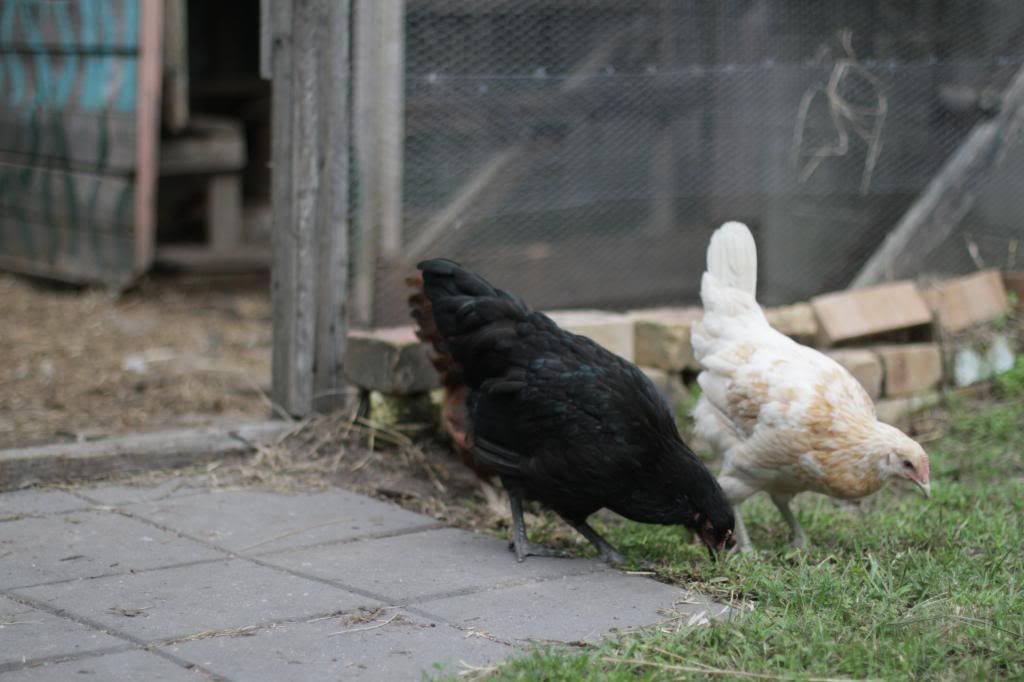
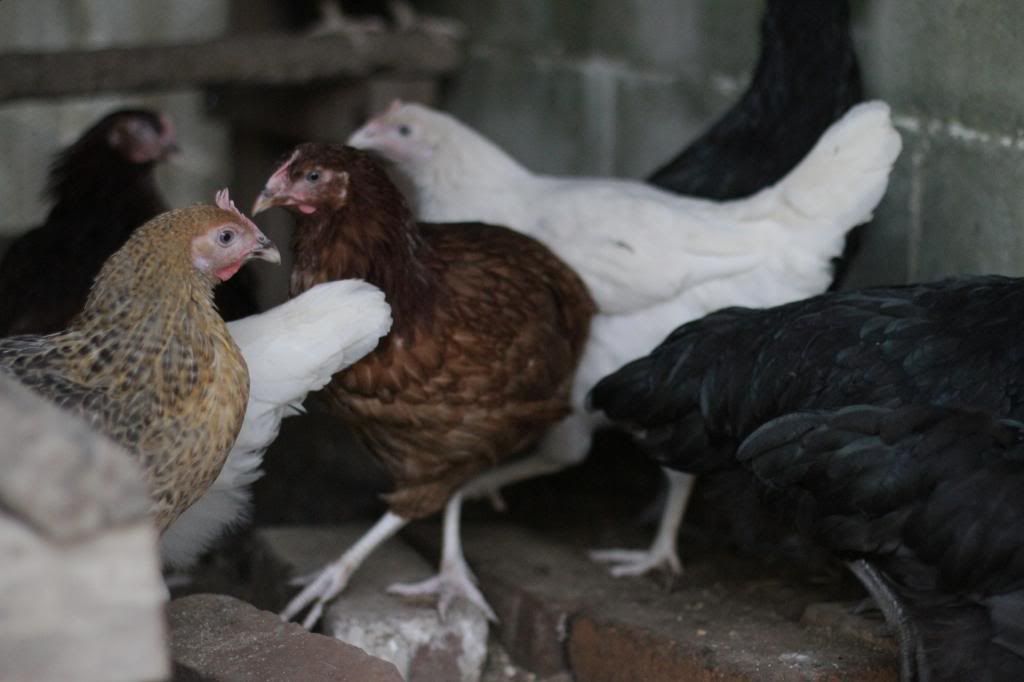
I am a proud mother hen of around three weeks. We have settled the girls into their new home, at the coop within the EcoGarden at our local neighbourhood centre.

Neighbourhood centres are a bit fab. Ours is set in a little community hub complex, nearby a preschool, long day care centre, community health centre, youth centre and mental health outreach. What a great place! I went there last year to attend a weekend organic gardening course, got chatting to another lady, we discovered the unused coop and the plans began. We are both in positions where keeping chickens at home isn't possible right now, so taking out a lease of the EcoGarden's chicken coop presented an ideal solution.

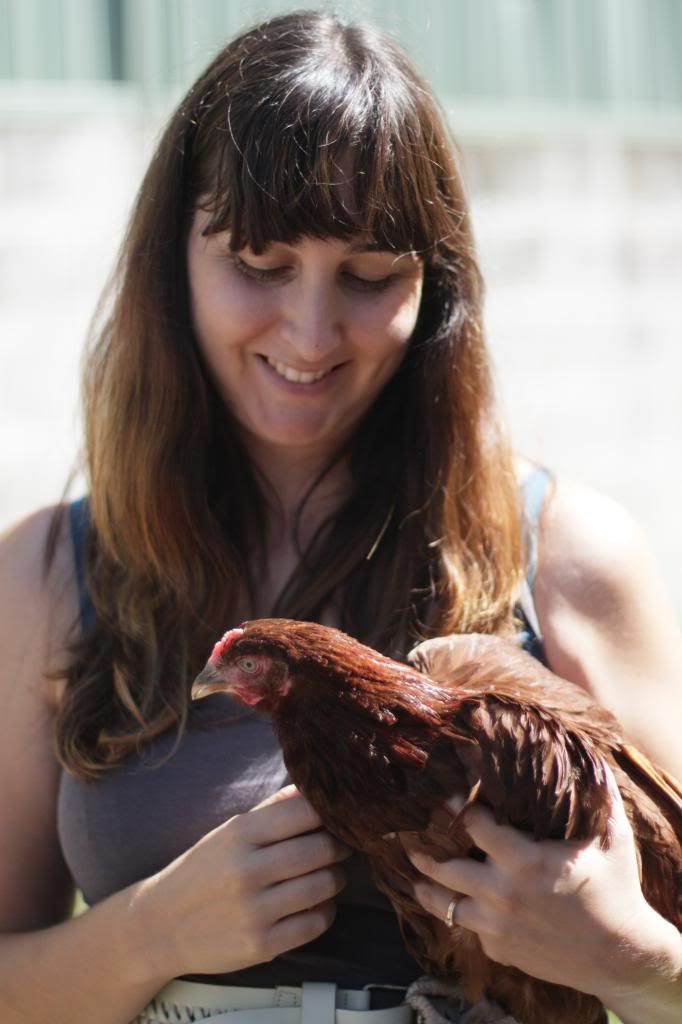
The rainy Friday arrived for me to collect our 12-week-old pullets from the breeder, who does a regular off-the-back-of-the-truck (literally) order and pickup through a produce store a little way from home. I stood in the fat plopping rain, waiting in line with my rapidly-soaking cardboard box. I laughed nervously as the farmer put my twelve ordered ladies in the box, couldn't help but think how undignified it was to hold them by the feet! The reality of caring for real, actual livestock struck me when I picked up my heavy, warm, life-filled box, only to smear chicken shit all over the front of my shirt.

Three weeks on, the girls are growing, enjoying a range of kitchen scraps and becoming used to small children in gumboots. They are getting named as time goes on, the white one with caramel is called Butterscotch, one of the black ones has been called Shadow Hen, I picked the greyish one as Ethel, one of the red ones is Rosie, and my little guy has named the fattest black hen Larry.

We visit daily to check their food, water and clean what needs cleaning. The kids are so very enamoured with the whole thing. We are all learning so much. I am already deeply affected by seeing the range of activities undertaken by the girls throughout the day. Connecting my new understanding and respect for chooks with choices I make when shopping for eggs (only for a little while longer!) and chicken meat is quite confronting. But so very worthwhile.
Rosie wonders...'Who IS this awkward bird?'

Wednesday, November 28, 2012

can ya dig it? or is it un-palette-able?

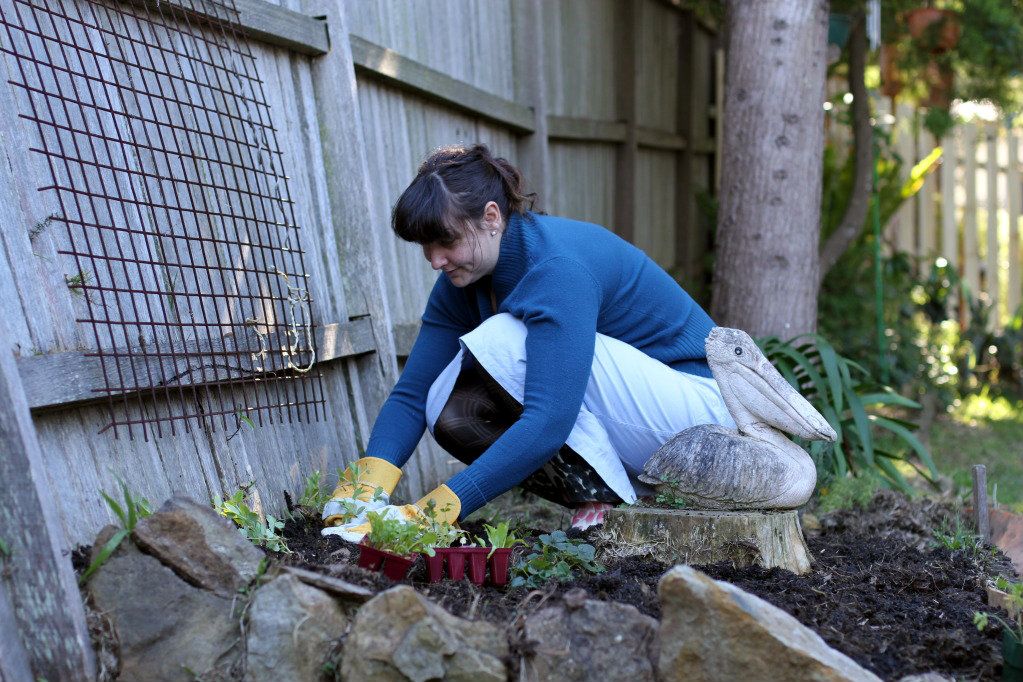
I got busy over the weekend. Down and dirty. But, no digging required this time, working on a no-dig veggie bed and a vertical snacking garden.

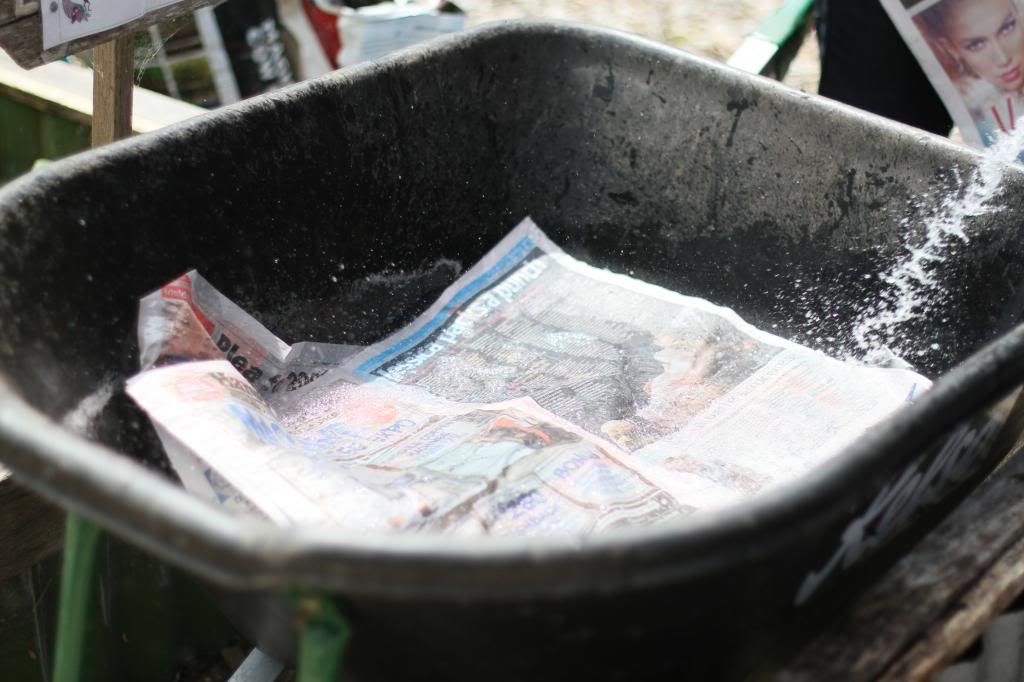
Preparing the no-dig garden bed. This is how I did it, only not quite as richly diverse. I used newspaper, straw, cow manure, some organic fertilizer pellets, organic compost for the planting and lucerne for mulch. My helper enjoyed the watering part.
The garden bed planted out. Lebanese cucumbers on an old piece of fence (use what we have!), corn, some different varieties of heirloom tomatoes and some capsicums. And some perennial spinach for good measure.
Chilli in a pot. Likes to be alone.

To make a vertical snacking garden. First, pick up an old palette from the side of the road.
Cover the back with some weed mesh or shadecloth, stapling thoroughly into the shape of the palette- especially down each side.
 Starting at the bottom and working up, fill each terrace with some good quality organic compost or potting mix, pack it in nice and snug. Plant two or three seedlings in each terrace. The seedlings in tubes that I used were the perfect fit (thanks, Wayne!) The very top terrace is a little tricky as you need to fill the soil upwards, too. Take your time, it's gardening, it's meant to be slow.
Leave your palette garden resting at a 45 degree angle, for a couple of weeks. Make sure you measure the angle with a protractor. This allows the the roots time to get settled in and hold onto the soil nicely, so the dirt won't just fall out of the front when upright. I hope. What did I plant? Glad you asked...
Lemon thyme
Greek oregano
Wild and Italian rocket
Perennial spinach
Marigolds
Gai Lam and Bok Choy
Coriander
Strawberries
Rainbow spinach
Plain and garlic chives
Basil
Cos lettuce

I moved a little basil seedling that wasn't very happy into the vertical snack garden. My little O gave me a hand, and has been talking to his new friend Basil ever since the weekend. He says Basil is quite happy with his new friends.
 
The morning after planting, I came out to admire my handiwork, only to find the rocket had been chomped and little green eggs (or poos?) were left as evidence on the remaining leaves. I went to get provisions (in my housework clothes) to make Em's Famous Butterfly Recipe. I might also have to try Vanessa's Rather Artistic Solution for the Cheeky Buggers.
A perspective of the bestest, sunniest position in our yard, one of the paved terrace layers. I can already see the difference adequate sun makes, and have started moving some plants out of the original bed, and allowing the rest to go to seed.

Love this stuff. It's getting into my veins. If it's in yours, too, come and link in at Squiggly Rainbow!

Monday, November 19, 2012

build a no-dig garden

A big part of the organic gardening course I took part in recently was spent working together to build a no-dig garden. Our lovely teacher, Kerrie guided us through the process. You can read more about Kerrie's thoughts on organic gardening and permaculture here.

The no-dig garden system was developed by Sydney gardener, Esther Dean during the 1970's. It basically works in the same way as composting. You build up layers, then plant your little babies in a little compost in the top. Here is what Kerrie had to say about no-dig gardening:

S: What are the important things to remember when making a no-dig garden?
K: Correct choice of site;  veggies need about 6 hours of sunlight
Good planning and design; will it be a raised garden bed, a mandala, a keyhole shape? Are pathways needed?  How will the plants be placed within the space?
Access to water
Proximity to the house (in our Zone 1 as we say in permaculture)
Adequate resources; newspaper, manures, straw, hay, multiple elements for the layering of the “lasagne”.  Essentially a no dig garden is a version of a compost heap; carbonous and nitrogenous materials are required
Start with sheet mulching of newspaper, must be nice and thick!
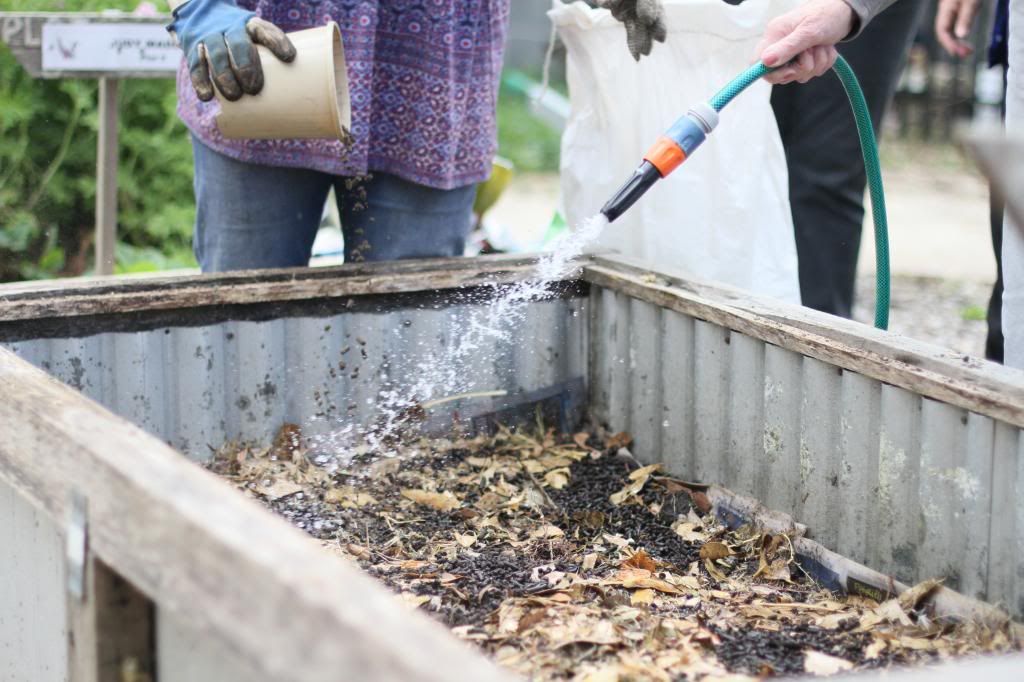
Water each layer as you go
Finish with a layer of mulch, and use at least a handful of compost or soil with each plant placed in the garden
And remember, it will “sink down”, same as a compost heap, so ensure the plants aren't left high and dry when this occurs
 
Enjoy, delicious, organic produce from your own garden!  Nothing will ever taste so good, or be as satisfying.

You can build your own no-dig garden, too! They work well directly onto your lawn (even if the soil is very poor), I will be building two of them onto pavers! If you are popping your no-dig layers into a garden bed, you will need a good 40cm in height.

Wet down some newspapers. You will need a few, and open them up before you wet them.

Lay down a thick, well-overlapped layer of wet newspaper. Don't use the glossy pages.

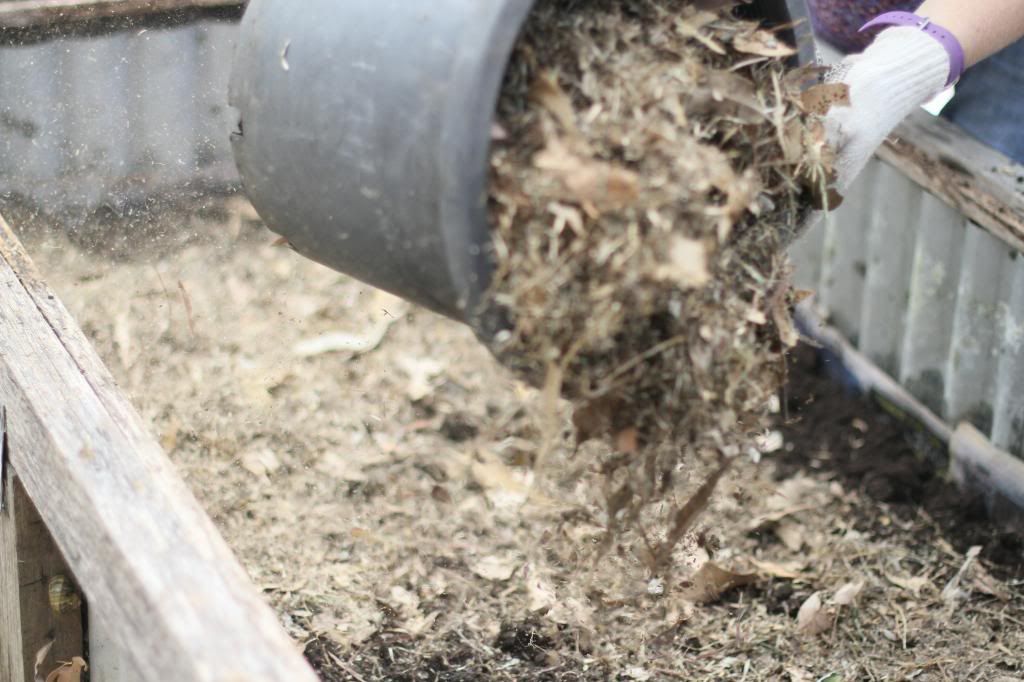
Start the lasagne layers! Cow manure (nitrogenous).

Deadybones leaves and grass clippings (carbonous).

Organic fertilizer pellets (nitrogenous). Don't forget to water each layer well!

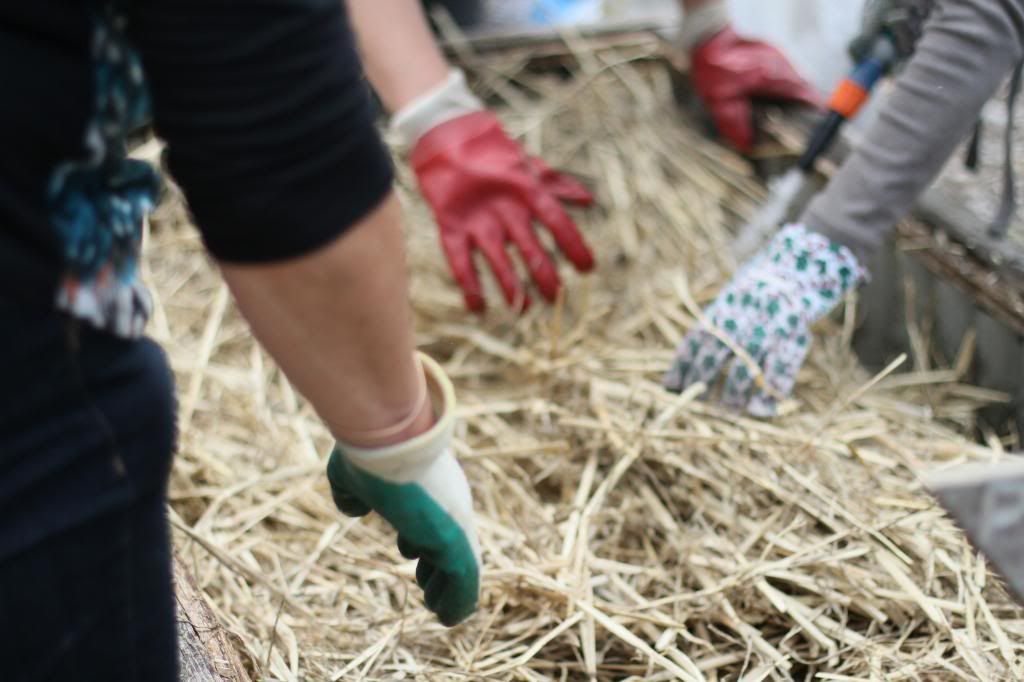
Straw (carbonous).

Some green comfrey leaves, or any other garden trimmings (nitrogenous).

Straw again (carbonous)

More cow manure, with a sprinkling of dolomite lime (nitrogenous)

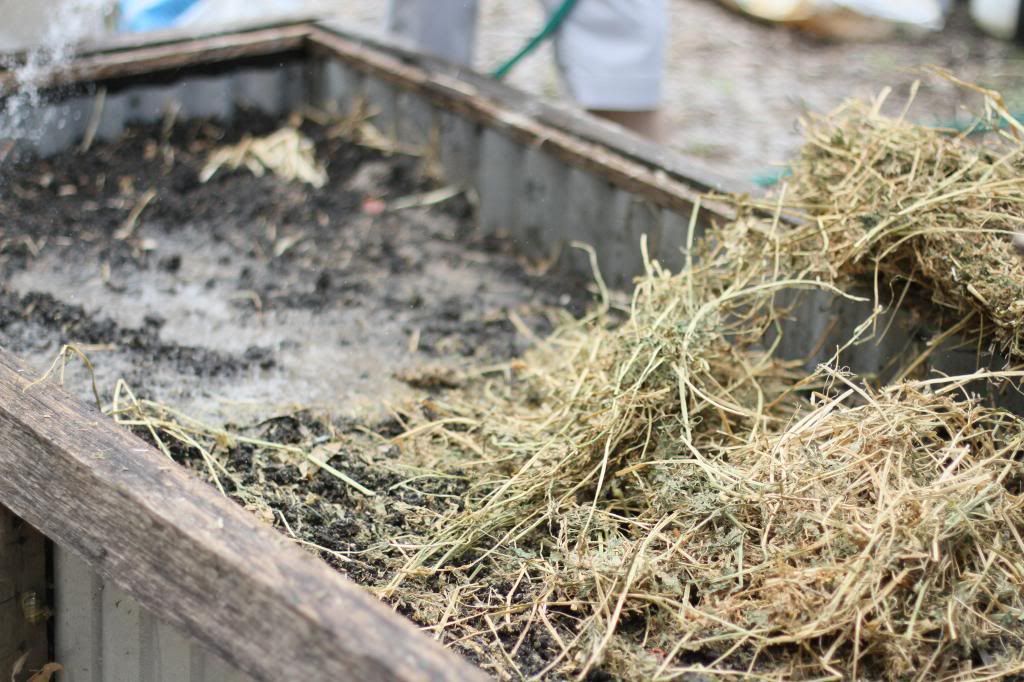
Final mulch layer of lucerne hay. More pricey than other mulching materials, but adds more nutrients to the soil as it breaks down.

Make a little burrow in the top layers and tip in some compost. Plant your little baby seedlings and water them well. Don't forget to talk to them every day.

Have you tried a no-dig garden yet?

Tuesday, November 13, 2012

learn and grow

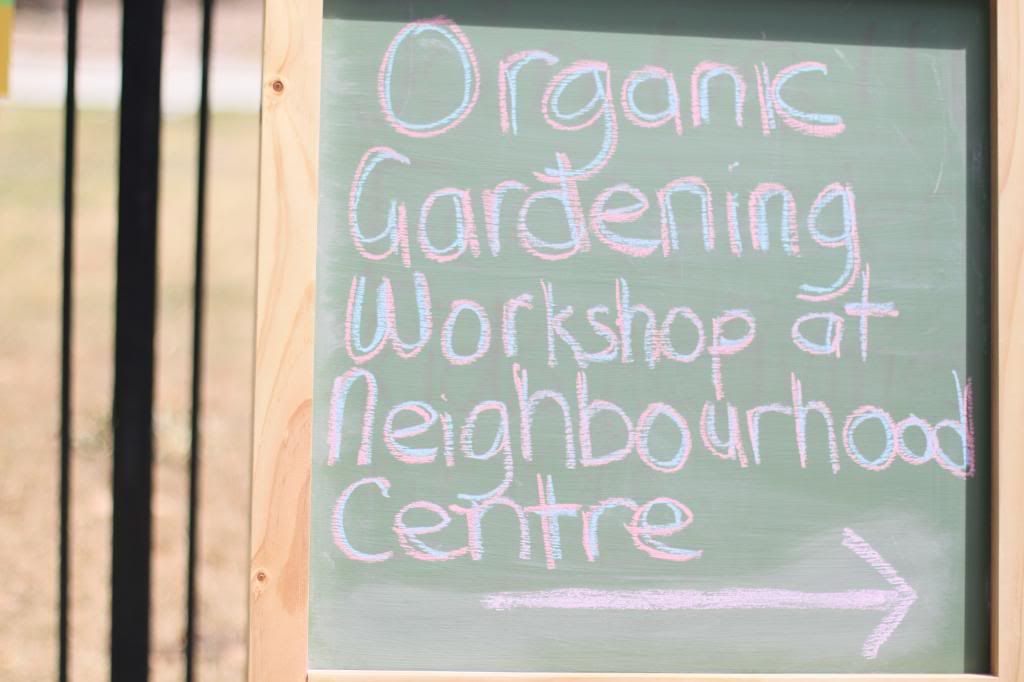
Have you ever had one of those moments in life where your heart and mind are open at exactly the same time that a message you need to hear is being spoken? I did, a couple of weeks ago. I went along to a two-day Organic Gardening course held at my local neighborhood centre. Which is funny, because I'm not a neighborhood centre kind of gal (whatever that is). And lately I'll make any excuse (thanks for the help with that, kids!) to avoid social situations. But, I really, really wanted to learn this stuff. So I paid my five bucks per day, threw a coffee mug in my basket, and went to spend some time, solo.

But my 'alone time' turned into meeting some wonderful, like-minded people. Discovering what my mind is like. Realising that my niggling feelings about going organic and making choices about our food based on season and locality aren't just following a trend. Permaculture and organic gardening are deeply rooted in tradition, methods tried and tested over many years. When we discussed companion planting, my mind wandered to the rambling vine of orange flowers over the back fence of my now-elderly grandparent's place...nasturtiums! My pop used to grow all manner of geraniums, too.

Our beautiful teacher was Kerrie, an ex-nurse, whose interest in the whole wellbeing of people led her on a path which now sees her teaching Permaculture at the nearby TAFE, and working in outreach courses for young adults with disabilities. A real good human. At no point did I feel alarmed or fearful about the state of the world, or the the food that we eat, but felt gently guided to understand that any step you take to eat clean, is a great step forward. Kerrie taught us about general companion planting for pest and weed reduction and we talked about our dreams for our gardens. As students, we ranged from container gardening on a patio, to volunteering in the local community garden, to getting ready to plant out a whole acre in veg. Kerrie made us delicious tea, herbs from her garden steeped for a little while. Give fennel and oregano (not together) a go- sounds odd, but you will like it!

When I came home, I realised that this was just the beginning. I sent Kerrie some questions, and she very kindly answered them, and allowed me to share them here, along with photos from the day. Next week, I will share a step-by-step how to for a no-dig garden. We are going to create two little no-dig beds over the weekend at our house, following the method I learned at the course. For now, enjoy Kerrie's beautiful words of wisdom about gardening, permaculture, and living a sustainable life.


S. Would you explain the key philosophy of permaculture?

K. Permaculture is a philosophy and design system for living sustainably, based on a set of ethics and principles.  It is a holistic approach to sustainability, that encompasses all aspects of life from agriculture, to house design to food choices, and so much more.

S. How does permaculture influence other aspects of your life?
 
K. Whenever making key decisions in my life, I always refer back to the three ethics of permaculture; earth care, people care and fair share.  While the ethics sound simple, they are pivotal in living life consciously and sustainably.  Permaculture also has a strong impulse embedded in “seeing solutions not problems”.  It is all about empowering people with knowledge and tools to make a positive difference in the world, starting in your own immediate sphere of influence, in other words “Think Global, Act Local”.
 
S. What are some simple things we can all change or do, to make for a more sustainable life?
 
K. There are so many things we can all do to live more sustainably...so where to start?  Permaculture emphasises an approach of starting small, and making small meaningful changes.  Celebrate all positive change, make it a habit, then move on to the next thing.  “Work where it counts”.
 
One key area I am particularly passionate about is local food production.  Nearly 40% of our ecological footprint is food production, so if we move to re-localising our food supply, we can make a huge reduction on our impact on the earth in just this one key aspect of our lives.  Grow a few herbs and veggies, join a community garden, sign up at the local food co-op, shop at the local farmer's markets...just a few of the things we can do to reduce our “food miles”.
 
 
S. If you could teach everyone just one thing about gardening, what would it be?
 
K. Observation!  Or as we say in permaculture, observe don't react.  Take time to really observe what is going on.  Nature is wonderful, and has all the answers, if we will just take the time to watch and learn.  The pest that suddenly seems to be a problem, is maybe coming into balance with a predatory insect increasing it's population in response.
 
 
Have you met a really good human lately, a real teacher in your life? How is your garden growing?

Friday, November 2, 2012

i need a plan, stan.

I'm in the middle of one of those phases in life where I feel I'm trying to walk through molasses. We are very, very fortunate, yet there is a sense of little things being difficult, and a hesitation to start and finish little projects. Knowing full well that this is just a phase doesn't ease the feeling of itchiness and low, low self-worth.

So, I need a plan.

If I was in paid work right now, I would have handy somewhere a list of long-term and short-term goals, and be putting things in place to achieve these goals and feeling really bloody awesome when I tick one off the list. Achieved!

But in this unpaid-stay-at-home world, where tasks of cleaning, feeding and nurturing never EVER end, I rarely feel that sense of achievement. I need to bring some Achieved! back into my life.

Here is my list of things I'd like to achieve:
1. A pretty bedroom for my girl.
2. A green cleaning routine that actually happens every week (and actually works).
3. A beautiful, welcoming entrance to our home.
4. Bright, colourful flowers on the windowsill outside my kitchen.
5. Extending our kitchen garden to two more beds, plus the pallet herb garden.
6. Get chooks.
7. More efficient meal planning, preparation and storage of meals.
8. A better clothes storage system for the boys' room.
9. A handmade Christmas.
10. Establish my little at-home business, sewing vintage lovelies for little people.

I would never set that many goals at once, but I want to get all the projects that are muddling my brain out. And they all need to broken down and strategies sorted out to make them happen. Some of the goals might happen quite organically, others are going to take some serious elbow grease. They all point to one thing, though: A more efficient way of running our day-to-day life so that we can enjoy more. I want our home to be a beacon to friends and family, and a safe haven to us. I want to shed the last bits of scaly, we just moved skin, and act like we live in this home now.

Do you set goals for yourself? Have you experienced that Achieved! feeling lately?

Friday, September 28, 2012

in stitches: nappy stash

So much joy in working at the machine this past week. Lots of projects going, the lounge recovery continues, a birthday gift for a little girl, but first, I had to get these fitted nappies done for my girl.


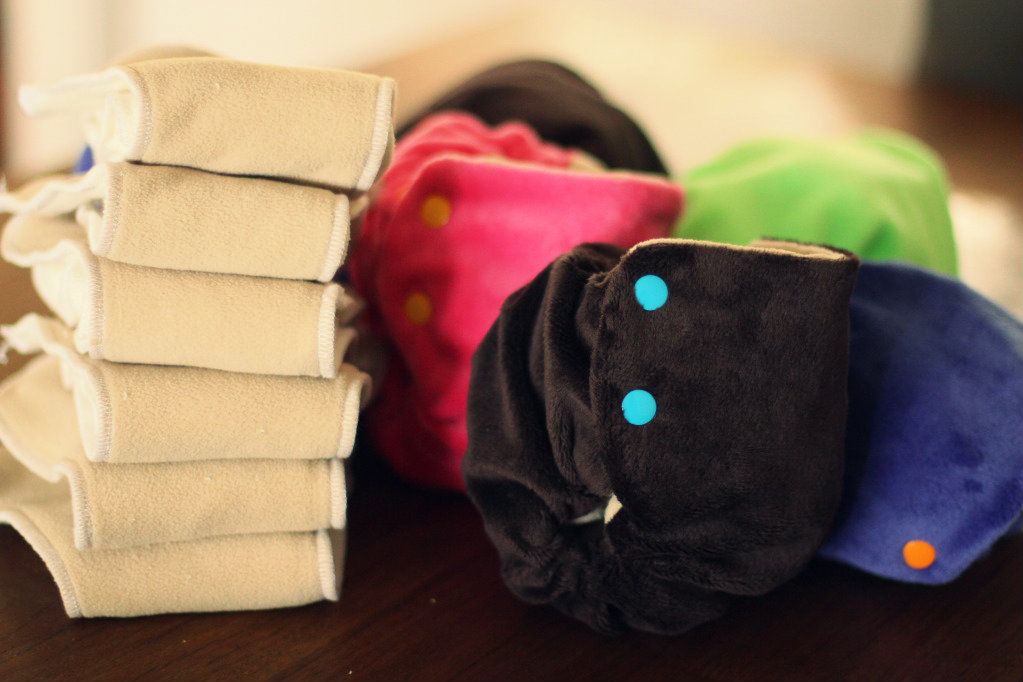
Details: fitted cloth nappy using the Fattycakes pattern (modified). Minky outer, hidden PUL layer and polar fleece liner. Ridiculously absorbent bamboo snap-in soaker. Materials from Greenbeans Australia. Playing around with the idea of pursuing a more creative career, giving my little shop a real, red-hot go. Maybe these could be a new 'line'?
 
Looking to see what the cool kids are doing, over here. 

Friday, September 14, 2012

in season: aussie farmers direct

In the midst of my exploration of the best source of local/organic/quality/convenient/budget-friendly (not asking for much, am I?) fruit and veg for our family, I received a knock at the door from an Aussie Farmers Direct representative. We used AFD years ago, back in the suburbs, with just the one kid. I was working full-time, and my cooking repertoire was limited to meals that began with a Maggi packet. There was no way we could keep up with the potatoes alone, so we dropped it.

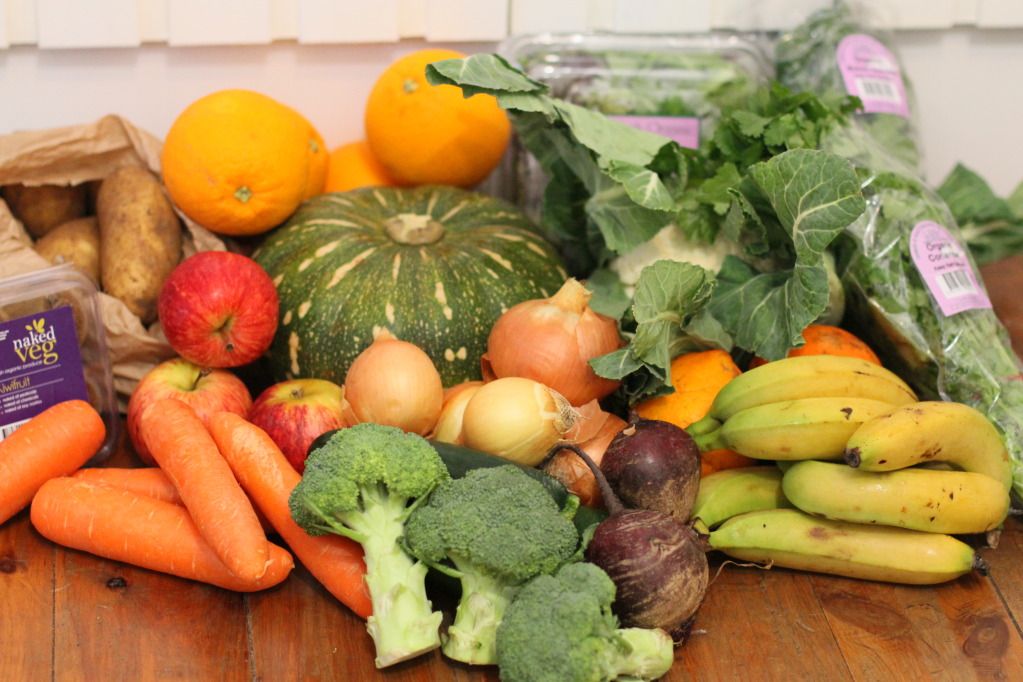
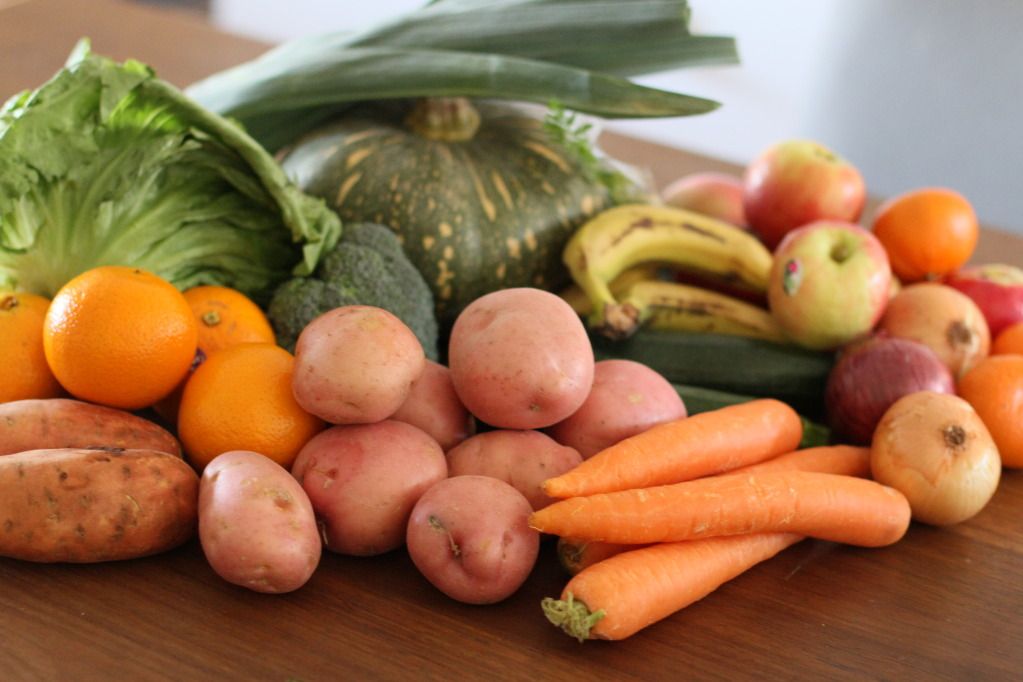
But this time, I saw the magic words...organic...delivered...local...and signed up for an organic family box. The set up was easy, you pay via direct deposit, they send a text to remind you of the delivery. This is what we received...
 
Fresh, abundant, delicious. I had kind of expected the organic stuff to be lesser quality, like the sad bits of broccoli you see in the supermarket, but it really wasn't. A gorgeous cauliflower, which became the yummiest curry ever. A lush bunch of coriander and beetroot (which I roasted) were among the favourites. I noticed on the few packaged things that they had been sourced from Victoria (we're on the Central Coast of NSW), which sparked a little conundrum for me- is organic worth it if it has to travel many kilometres? So I hopped onto the chat function on the Aussie Farmers Direct website and asked questions about the source of the produce. I was very reassured to find that there are several packing depots in each state (which is why the contents of the boxes vary), produce is most definitely Australian, and sourced regionally as much as possible. This box cost $56 delivered.
 
For the sake of comparison and curiosity, I changed my order for the following week to a regular family box...
Again, beautiful, fresh quality. At $37 a box, delivered, significantly kinder on the budget. 
 
So I found a lot to love about Aussie Farmers direct, this time around, I think helped along by my shifting attitude towards food and eating seasonally. Whole pumpkin two weeks in a row would have really had me scratching my head (and throwing away pumpkin a few weeks later), but now that I am working on building up recipes to use produce when it is in season, I no longer find that daunting. The delivery is very convenient and easy, and so exciting for the kids to unpack. The sales service is very friendly and helpful, I find the website easy to navigate. Aussie Farmers is far more flexible nowadays, you can change your order week-to-week, pick and pay is available if you want to choose individual items, and you can put your regular order on hold, is your family gets, say, gastro. On a Sunday, the box contents go up on the website, so you can check what's coming and do some menu planning. The addition of organic produce makes me happy. We also signed up for the milk delivery (and butter), which has reduced my need to pop to the shops several times through the week. Hallelujah.
 
I would love if Aussie Farmers supplied more specific information about the source of the produce. I wish the pick-and-pack option wasn't so expensive (when a delivery fee is included) because i really need an extra ten apples for lunchboxes, and that's all I need. I look forward to the organic range expanding to include milk and meat, especially whole chooks. I would love the pricing structure on the website to be listed as a per-kilo price, so I can readily compare pricing. But these are pretty small things. Overall, the service and the quality of the produce is excellent.
 
At the moment, Aussie Farmers Direct are offering a $10 credit for new customers! There are no obligations or contracts, so you may as well give it a try.


Wednesday, September 12, 2012

growing things: progress

It's been just over a month since we planted our first veggies in the garden at our new place. And this is how it is all growing...


The sugar snaps and snow peas looked to be struggling, so I pinched the little peas off and ate them. I don't know if that's the right thing to do, we'll see! The bok choy looks so lovely and robust, can't wait to eat some. Trusty Gardenate is telling me what I should plant in September, I think we will add some cucumbers and capsicums to out little kitchen garden next. Learning lots, linking up here:

LinkWithin

Related Posts Plugin for WordPress, Blogger...